Phytomelatonin, Sleep and Well-Being: A Pilot Study
Study summary by Reputable Health
A publication-based summary of research combining wearable measurements and participant questionnaires.
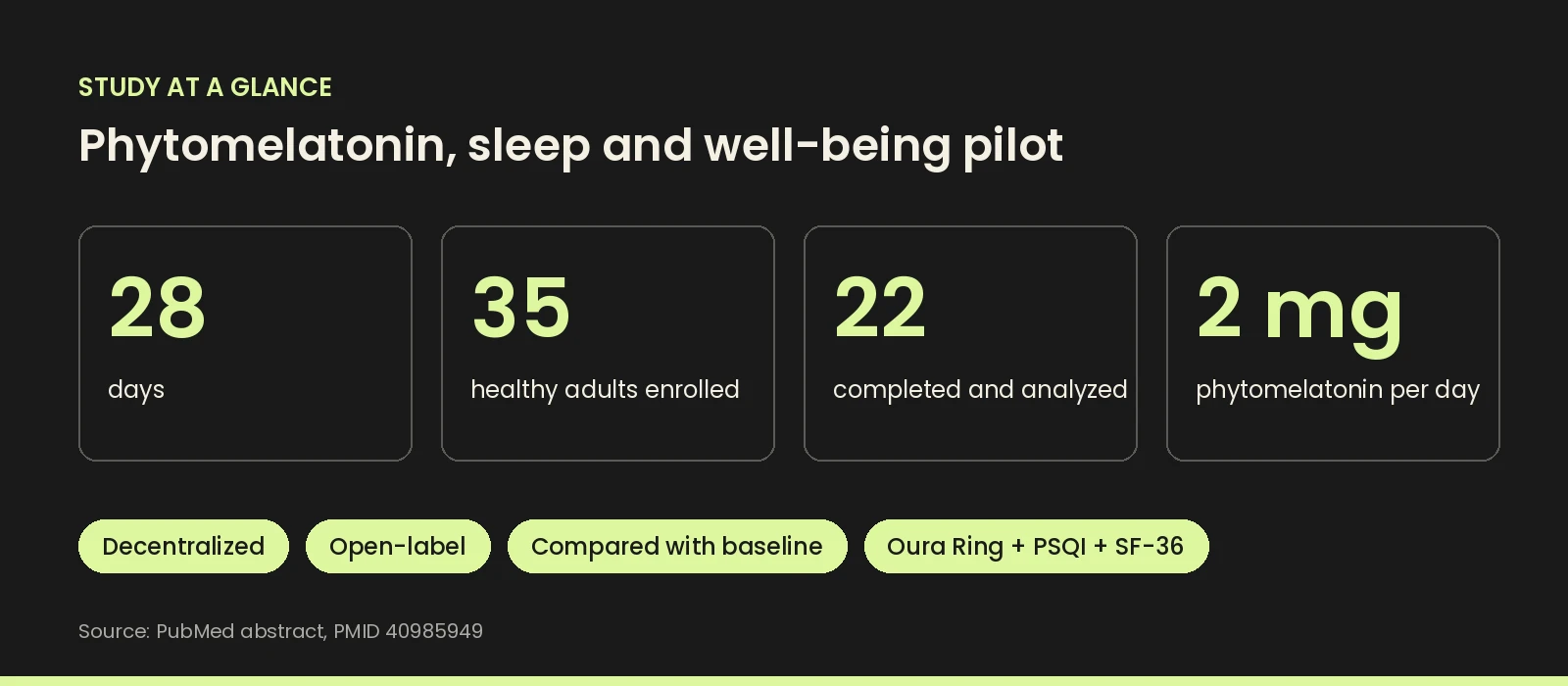
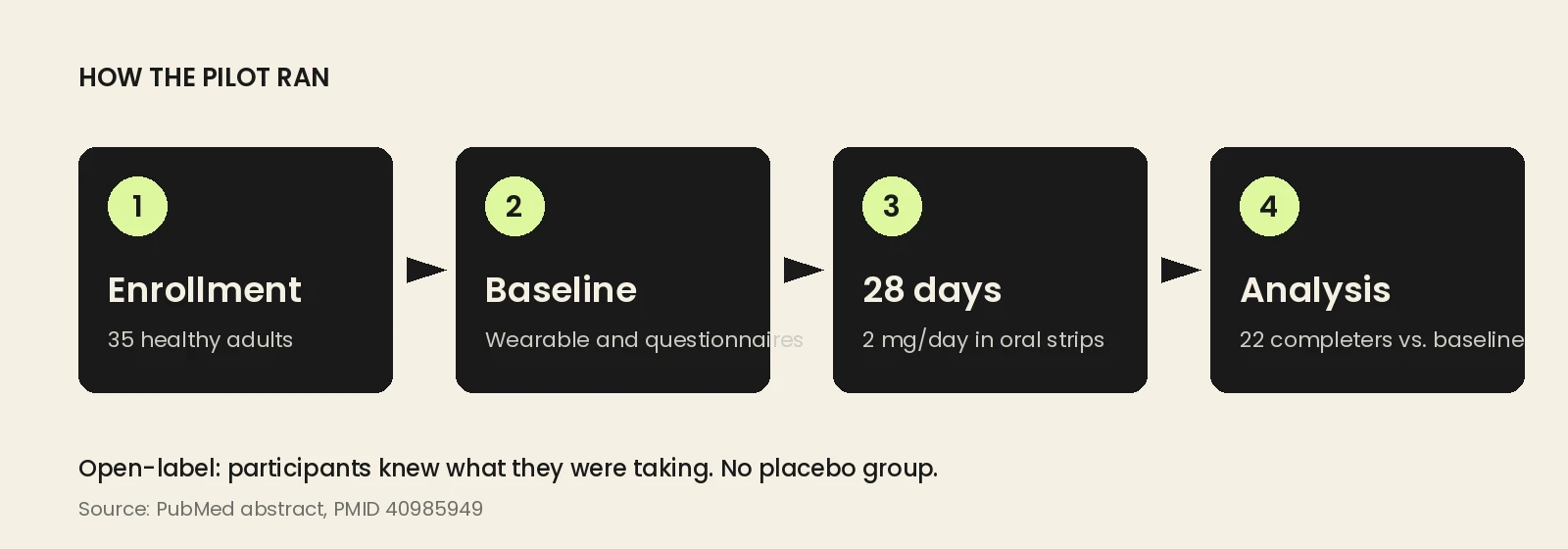
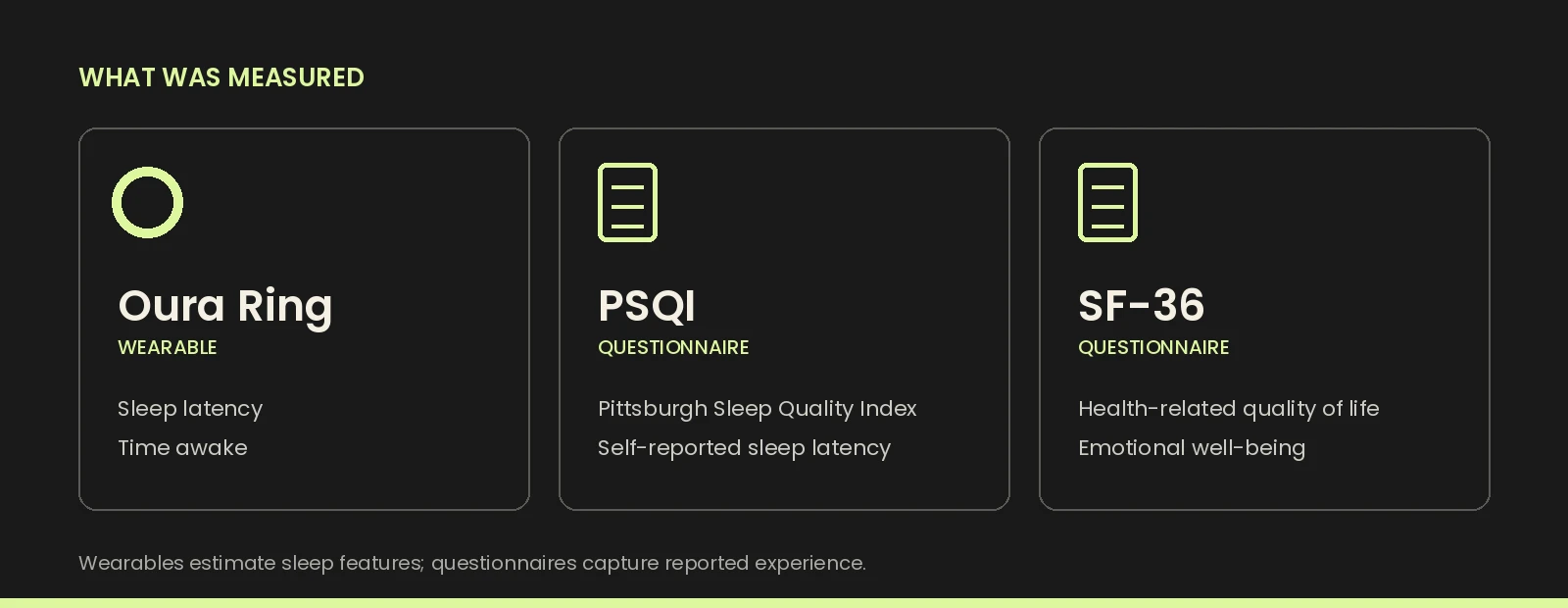
According to PubMed, this 28-day, decentralized, open-label study enrolled 35 healthy adults; 22 completed it and were analyzed. Participants took 2 mg/day of phytomelatonin in Somato® oral strips. Measurements included Oura Ring, the Pittsburgh Sleep Quality Index (PSQI), and SF-36 questionnaires.
Selected published results
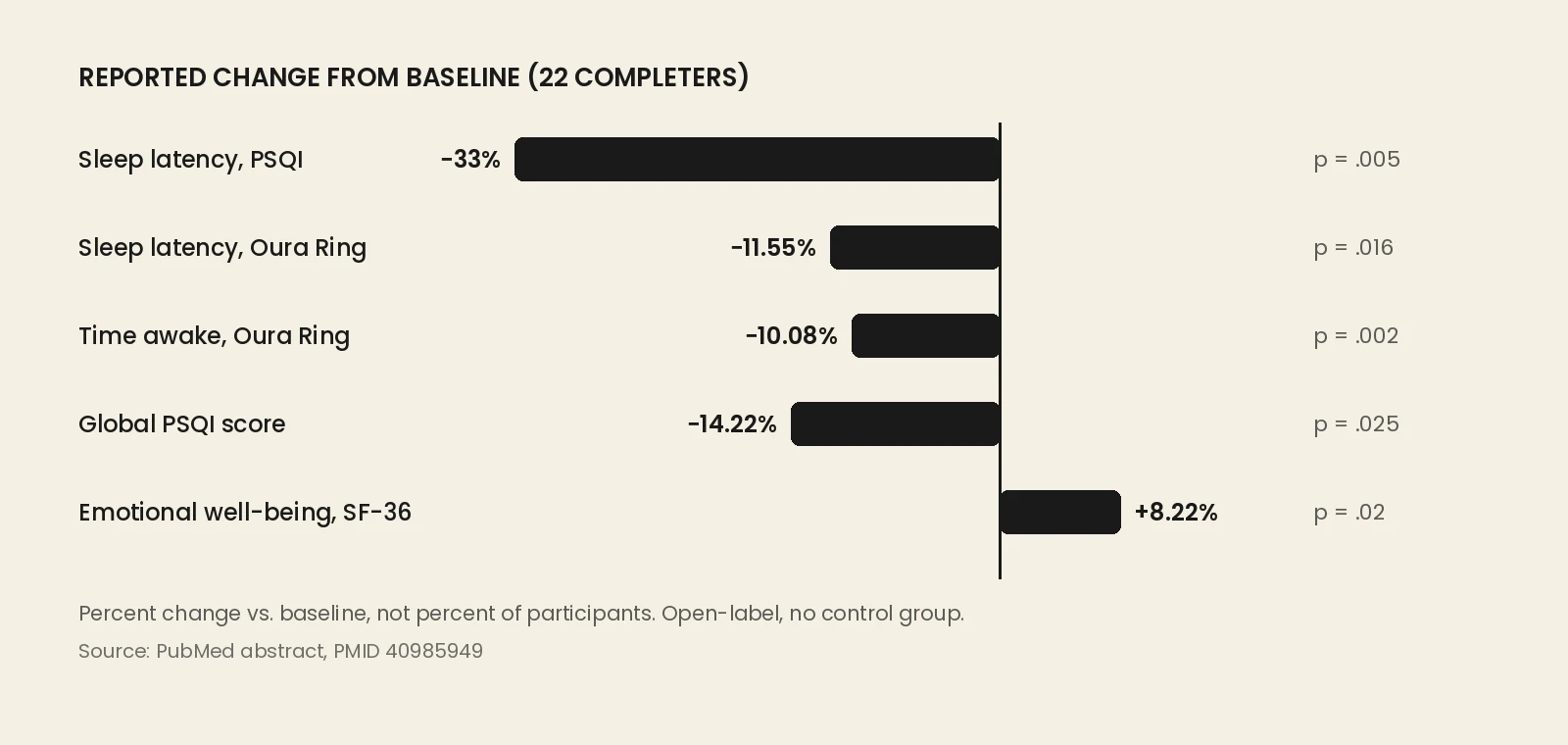
The abstract reports these percentage changes compared with baseline. These are not percentages of participants who improved.
| Measure | Change | Reported p-value |
|---|---|---|
| Sleep latency, PSQI | −33% | .005 |
| Sleep latency, Oura Ring | −11.55% | .016 |
| Time awake, Oura Ring | −10.08% | .002 |
| Global PSQI score | −14.22% | .025 |
| Emotional well-being, SF-36 | +8.22% | .02 |
Other reported SF-36 changes did not reach statistical significance. Sleep efficiency is omitted here because the abstract describes improvement while displaying a negative change; that result needs clarification before interpretation.
How to interpret this study
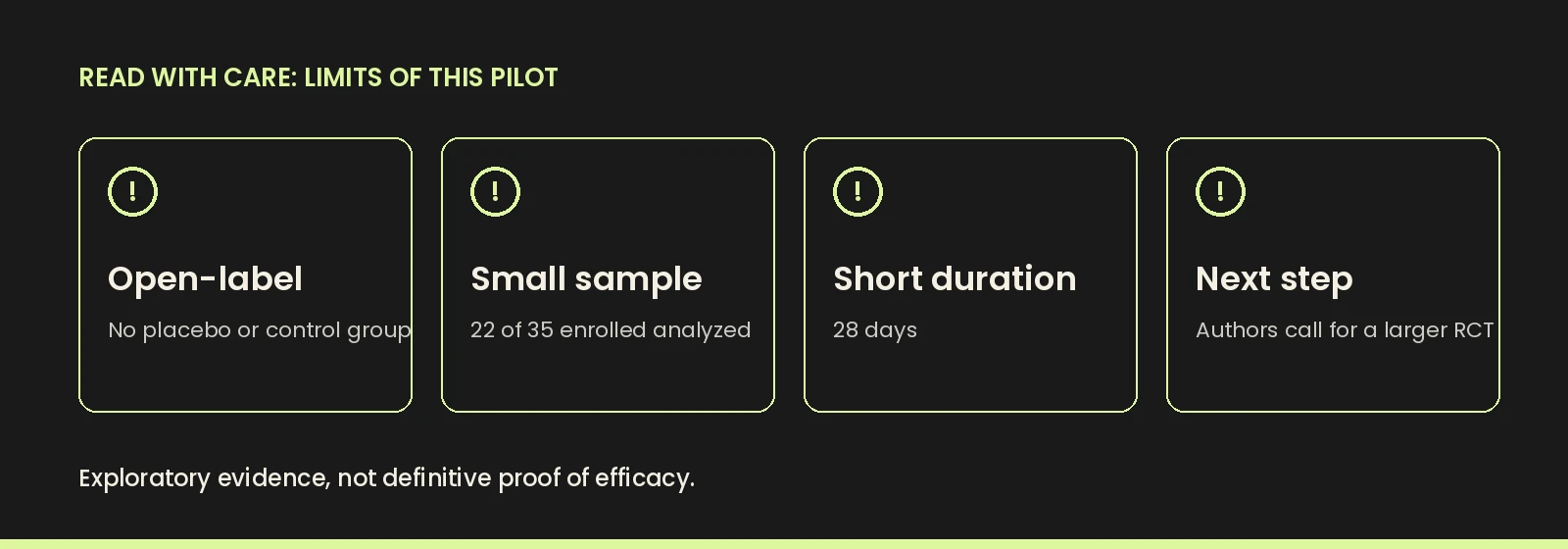
This is exploratory evidence. An open-label comparison with baseline cannot by itself establish that the intervention caused the changes. Expectations, natural variation and other influences may contribute.
The small analyzed sample, short duration and difference between enrollment and completion limit the conclusions. Findings among completers should not be assumed to represent everyone enrolled. Statistical significance does not establish clinical importance, long-term safety or suitability for a particular marketing claim.
The authors call for a larger randomized controlled trial. This summary does not present the pilot as definitive proof of efficacy.
Reputable Health and the publication
Authors Mackenzie De Jesus and Kyle Bergquist have Reputable Health affiliations in PubMed; Gene Bruno is also a co-author. This identifies authorship, not independent validation.
Learn more about our research methodology and evidence, clinical research platform, and clinical research team.
Reference
De Jesus M, Bergquist K, Bruno G. Effects of Somato® TOMATO Fruit Extract on Key Physiological and Psychological Domains Associated with Sleep Quality, Autonomic Function, and Health-Related Quality of Life: A Pilot Study. Alternative Therapies in Health and Medicine. 2026;32(1):20–24. PMID: 40985949.
This summary uses the public PubMed abstract. It includes no unpublished client results.
Questions about the study methods
Was this a randomized, placebo-controlled trial?
No. This publication describes an open-label pilot with comparisons against baseline. It should not be described as a placebo-controlled trial.
Why use both a wearable and questionnaires?
They capture different perspectives. A wearable estimates sleep features, while questionnaires capture participants’ reported experiences. Agreement between them does not remove the limitations of the study design.
Does this study support claims about other products?
Not automatically. Its findings concern the studied intervention, dose, population and duration. Applying them elsewhere requires a separate assessment of relevance and the wider evidence.